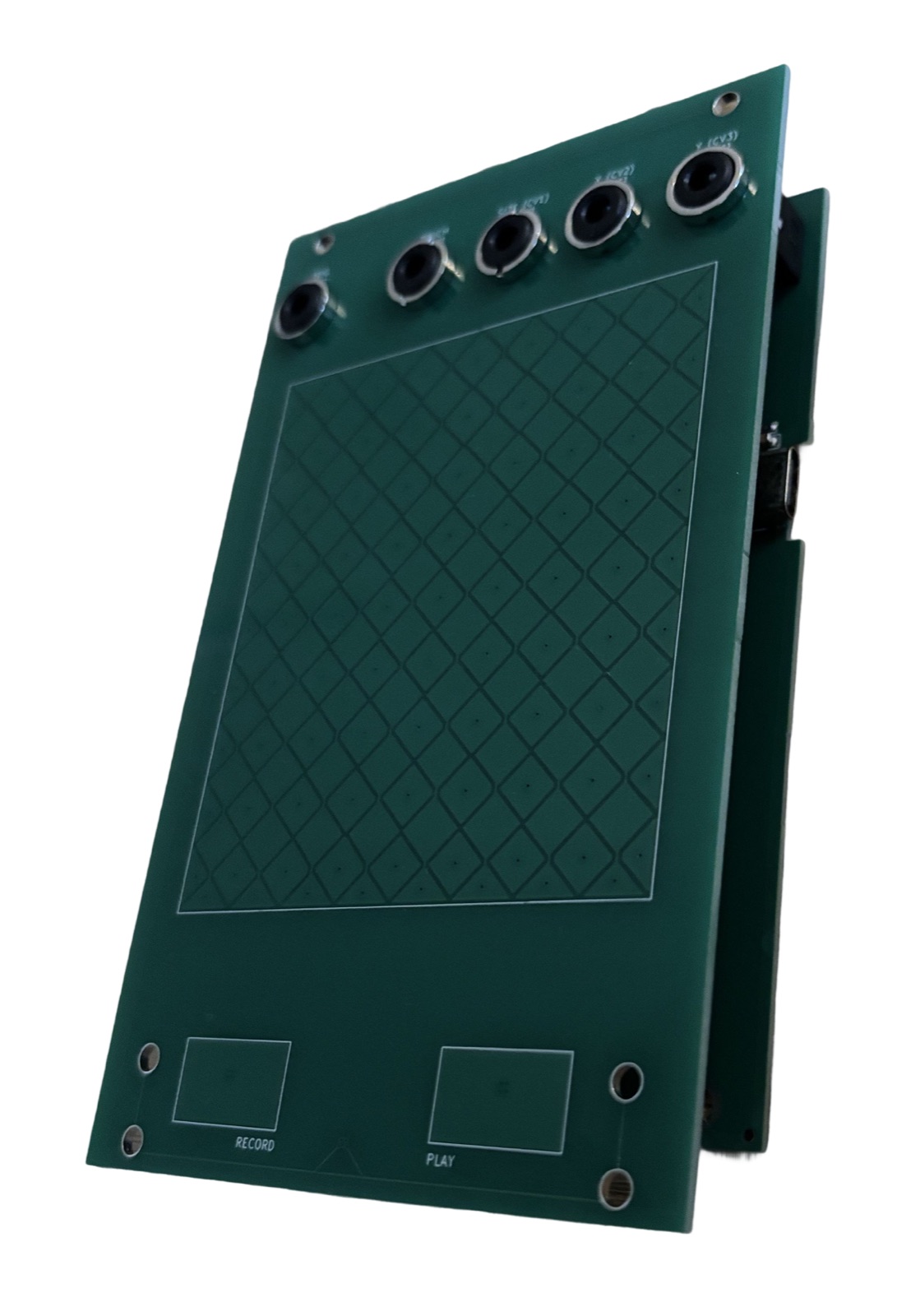
TouchSurface CV
Loading model
Master's thesis · 2026

TouchSurface CV

A touch-sensitive control module for modular synthesizers.

Role
Designer and engineer
Scope
Product design, software engineering
Timeline
01.2026 - 09.2026
Scroll
Overview

Expressive touch control for the modular synthesizer.

Modular synthesizers are assembled from independent modules, each performing a single function and connected by patch cables. Control is typically limited to knobs, switches and buttons.

TouchSurface brings a continuous touch surface to this format.

Multidimensional input

One gesture, three independent signals.

The module continuously reports finger position, contact size and touch state. Because each is available as a separate output, a single gesture can control several parameters of a sound at once.

X / Y POSITIONCONTACT SIZETOUCH STATE
Sensor surface

A diamond electrode grid, built into the board.

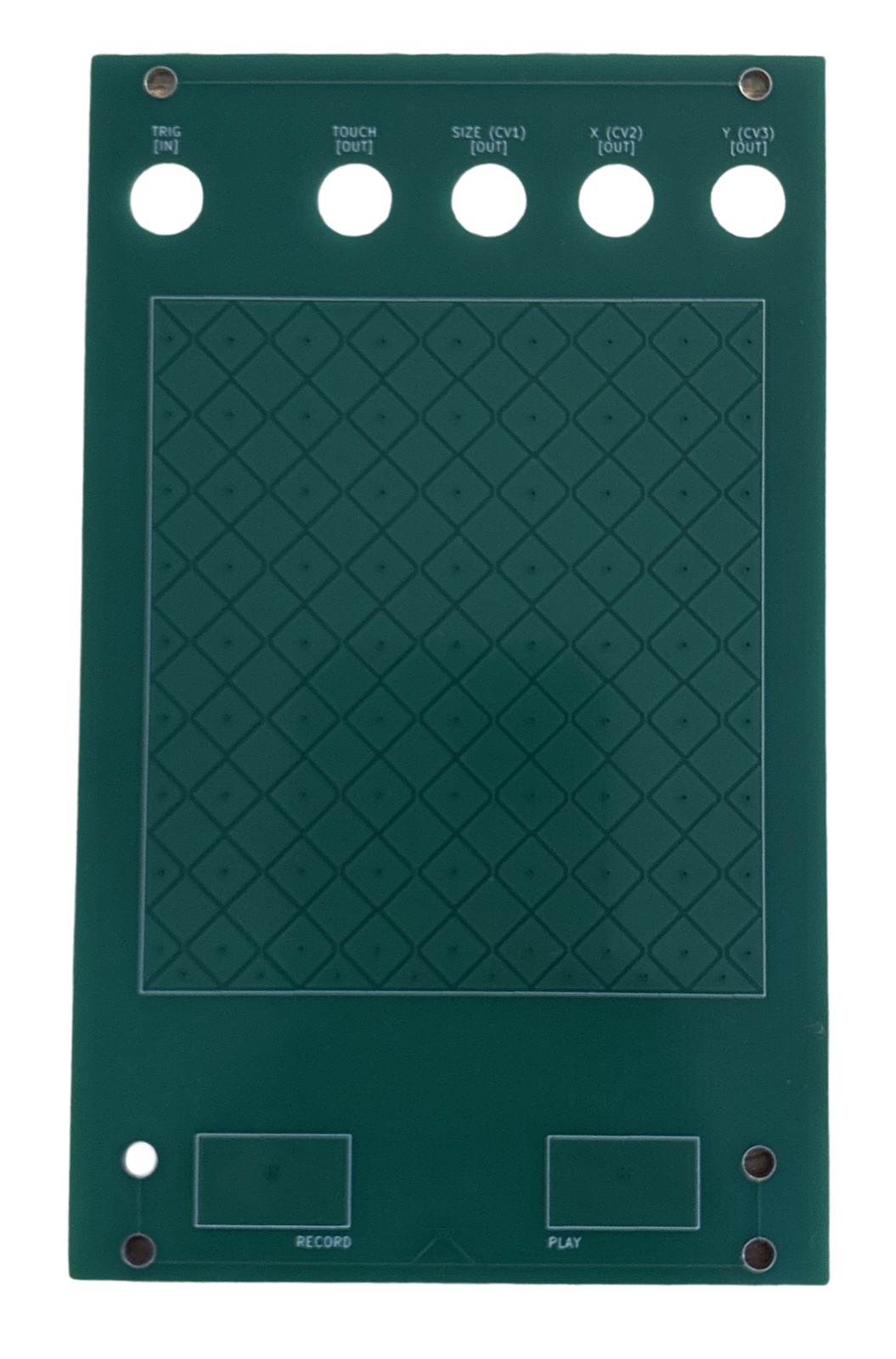
The playing area is a diamond-pattern electrode grid made in the copper of the circuit board itself. The pattern was first tested in copper tape before it was committed to the final panel layout.

Panel layout

All connections along the top edge.

The five sockets are arranged in a single row above the touch area. Patch cables fall away from the playing surface, leaving the hand an unobstructed path across the panel.

TRIG INTOUCH OUTSIZE OUTX OUTY OUT
Modular architecture

Two boards, joined by a flexible cable.

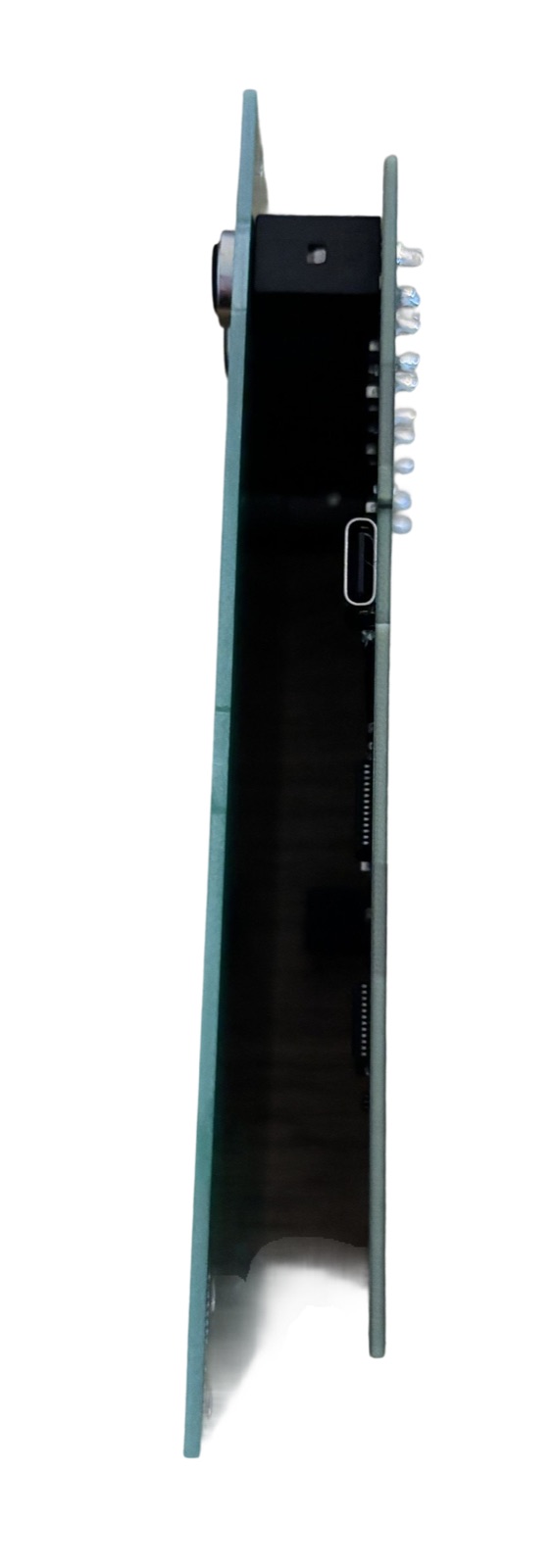
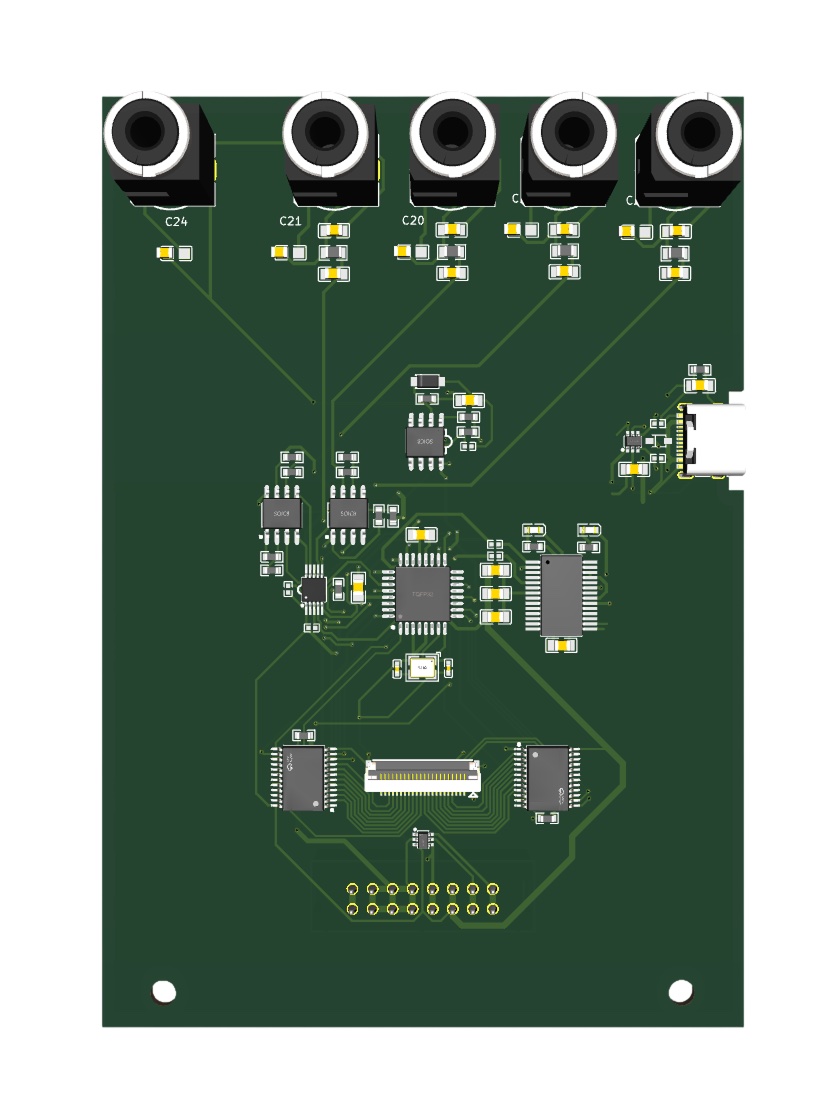
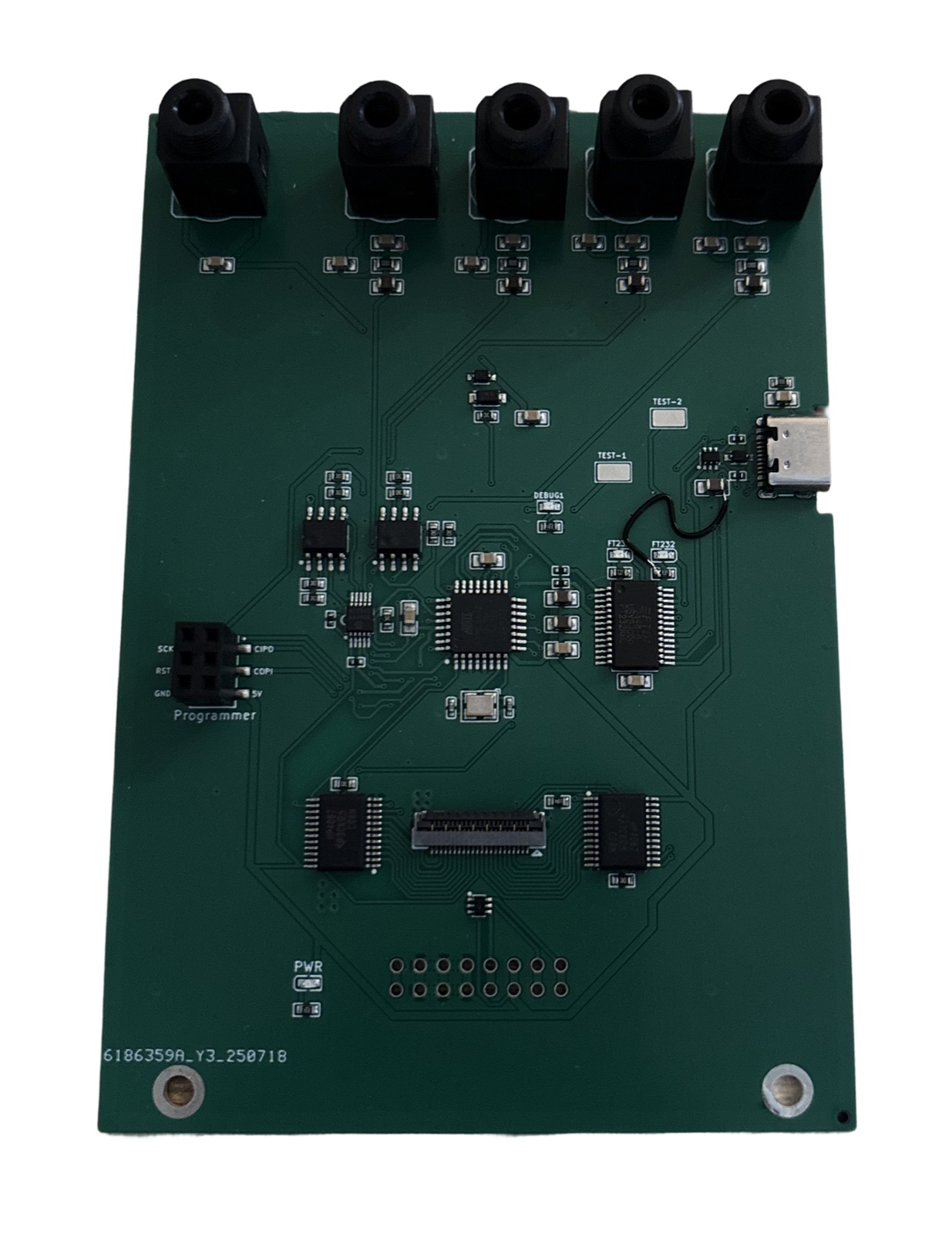
The touch surface and the electronics are built as separate circuit boards, so new sensor layouts can be tested without redesigning the electronics. This proved its value when the first panel failed: only the panel had to be redesigned.

Accessible hardware

Low-cost components, fully open source.

The firmware runs on an inexpensive, widely available microcontroller. Touch sensing operates continuously in the background while the main program handles signal output and recording. All hardware and software files are published as open source.

Gesture recording

Record a gesture and replay it in time.

Two touch-sensitive pads record a finger movement and play it back. Playback is designed to follow an external clock, keeping recorded gestures synchronized with the rest of the system. Touch pads were chosen over mechanical switches to keep the panel surface uninterrupted.
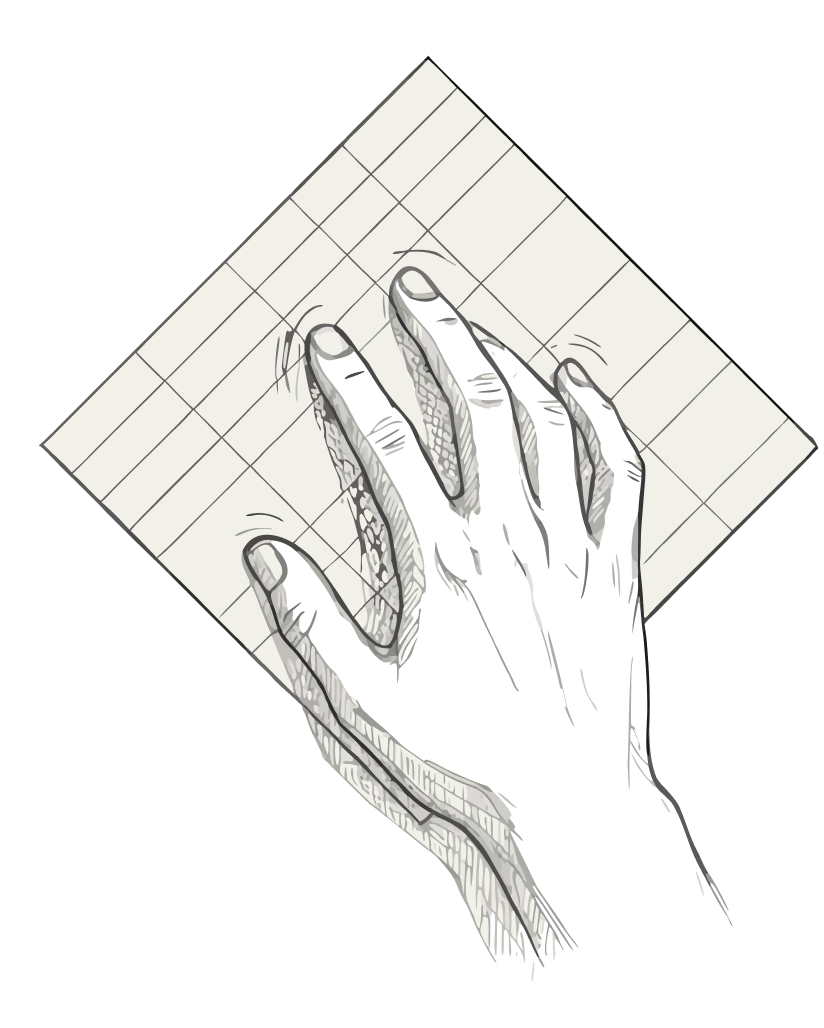
RECORDPLAYCLOCK VIA TRIG IN
Design intent

The flexibility of a research tool, in a module built for performance.

Context

Existing tools are either closed or not built for the stage.

Commercial touch controllers for modular systems are closed products. The shape, size and behavior of the touch surface are fixed by the manufacturer.

Research toolkits for touch sensing offer far more flexibility, but they are designed for laboratory prototyping rather than for a self-contained module in a live rack.

The aim of this project was to close that gap: an instrument as open and adaptable as a research tool, yet robust enough to perform with.

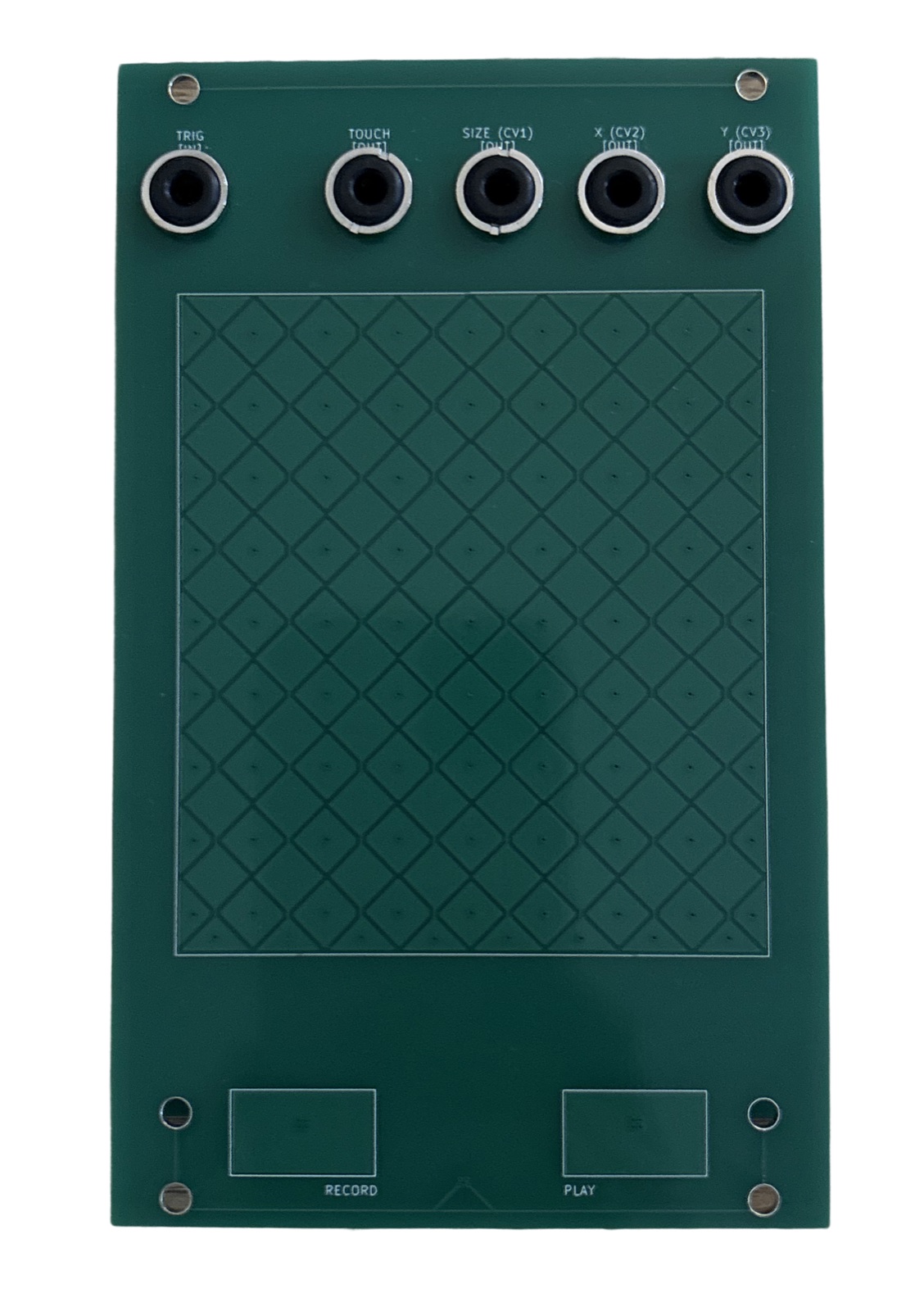
Fig. 01Concept sketch
Pencil sketch of a hand resting its fingers on a gridded touch surface
Early concept: the hand rests on a gridded surface and plays by sliding.
Material research

The design began with materials, not circuits.

Before drawing a schematic, I explored how everyday materials could act as touch sensors. Each experiment tested a different balance of sensitivity, reliability and tactile quality.

M-01 Required firm pressure

Pressure-sensitive film and conductive thread

Produced readable signals, but only under firm pressure. The interaction felt closer to pressing a button than to touching a surface.

M-02 Sensitive but inconsistent

Embroidered textile sensors

A spiral stitched into an embroidery hoop responded to a hovering hand and was pleasant to touch. Small variations in stitching and fabric tension, however, produced inconsistent readings.

M-03 Rapid prototyping

Copper tape

Allowed sliders, grids and diamond patterns to be tested quickly, including through a layer of paper.

M-04 Precise and repeatable

Printed circuit boards

Offered the precision and repeatability the instrument required. An attempt to lacquer a board for a refined finish disabled the sensor, showing that surface finish and sensing must be designed together.

Resulting design requirements
Responsive to light touch.Contact, not force, drives the interaction.
Continuous control.Sliding movement rather than discrete buttons.
Robust and adaptable.Durable enough for performance, and open to new surface layouts.
Signal design

Raw signals, with meaning defined by the patch.

Rather than building in preset behaviors or gesture recognition, the module outputs unprocessed control signals. The performer decides, through patching, what each signal controls.

The same gesture can bend pitch in one patch and open a filter in the next. Keeping the instrument neutral is what keeps it flexible.

Fig. 02Signal flow
MICROCONTROLLER TOUCH PANEL FLEX CABLE TRIG IN CLOCK X Y SIZE TOUCH PATCH CABLES PITCH ENVELOPE FILTER LEVEL MODULAR SYSTEM · EXAMPLE ROUTING
Iteration

Redesigning the panel, retaining the electronics.

The first touch panel did not sense reliably. I traced the fault to overlapping traces in the panel layout, redesigned the board, and connected the revised panel to the existing electronics.

The two-board architecture was planned from the outset, and this iteration confirmed its value. It also allows alternative surface geometries to be explored in future work.

Fig. 03Section view
TOUCH PANEL COMPONENT BOARD FLEX CABLE SOCKET STANDOFF
Section view, not to scale. Replacing the panel leaves the component board untouched.
Prototype

From render to working hardware.

Firmware

Synchronizing processing with the sensor.

Running responsive touch sensing on a small, low-cost microcontroller required adapting an existing research toolkit so that sensing could run continuously in the background.

During development, adding a debug message unexpectedly made the surface feel more responsive. The message had slowed the main loop down to the sensor's update rate. This led to a cleaner design in which processing runs only when new sensor data is available.

Processing model
// initial: the loop outpaces the sensor loop → read → read (stale) → read (stale) … // revised: process only on new data sensor ready → process → output → wait
Evaluation

Measured performance.

The prototype was evaluated through measurements of sensing accuracy, processing time, update rate and recording fidelity.

0.4cells
Mean position error
111 touches at five locations on an 8 × 8 grid
<1ms
Mean processing time per sensor update
Measured on the microcontroller
~50Hz
Sensor update rate
Stable with and without touch
7/7
Recorded steps reproduced exactly
Seven-step gesture, including pauses
Fig. 04Contact-size measurement
Schematic, not to scale.
Key finding

Contact size reflects the strongest touch, not the total area.

The size signal measures the area of activity surrounding the strongest point of contact rather than the total contact area. A flat thumb therefore reads larger than a fingertip.

Two adjacent fingers, however, do not register as a larger touch, because the second finger falls outside the measured region. This finding informs how the size signal should be defined in the next iteration.

Reflection

Key insights from the project.

Materials shape interaction.

Fabric, copper tape and circuit boards each invite a different kind of touch. How a surface feels cannot be separated from how it senses.

Constraints inform design.

The limits of a small, low-cost microcontroller demanded simplification, and those simplifications became part of the instrument's character.

Testing reveals the unanticipated.

Both the failure of the first panel and the behavior of the size signal changed the direction of the design.

Future work
  • User studies with musiciansEvaluate which qualities of the interaction feel expressive in performance.
  • Alternative surface geometriesCircular, linear and larger grid layouts, driven by the existing electronics board.
  • A refined contact-size signalDevelop a more meaningful measure of touch size.
Open source

Available to build and adapt.

The complete project is published openly so that others can reproduce, modify and extend it.

View on GitHub github.com/pinkmosss/touchsurface_cv